10 Reasons to Take a Cooking Class in Italy
Think a cooking class is just about learning recipes? Think again. Here's why it's one of the most meaningful things you can do in Italy.
When people book a cooking class in Italy, they usually say the same thing: "I want to learn how to make real pasta." Or pizza. Or tiramisù.
And they do learn. But when they leave, they almost never say the best part was the recipe.
Here are ten reasons why a cooking class in Italy is one of the best travel experiences you can have — most of which have very little to do with food.
##
1. You enter someone's home
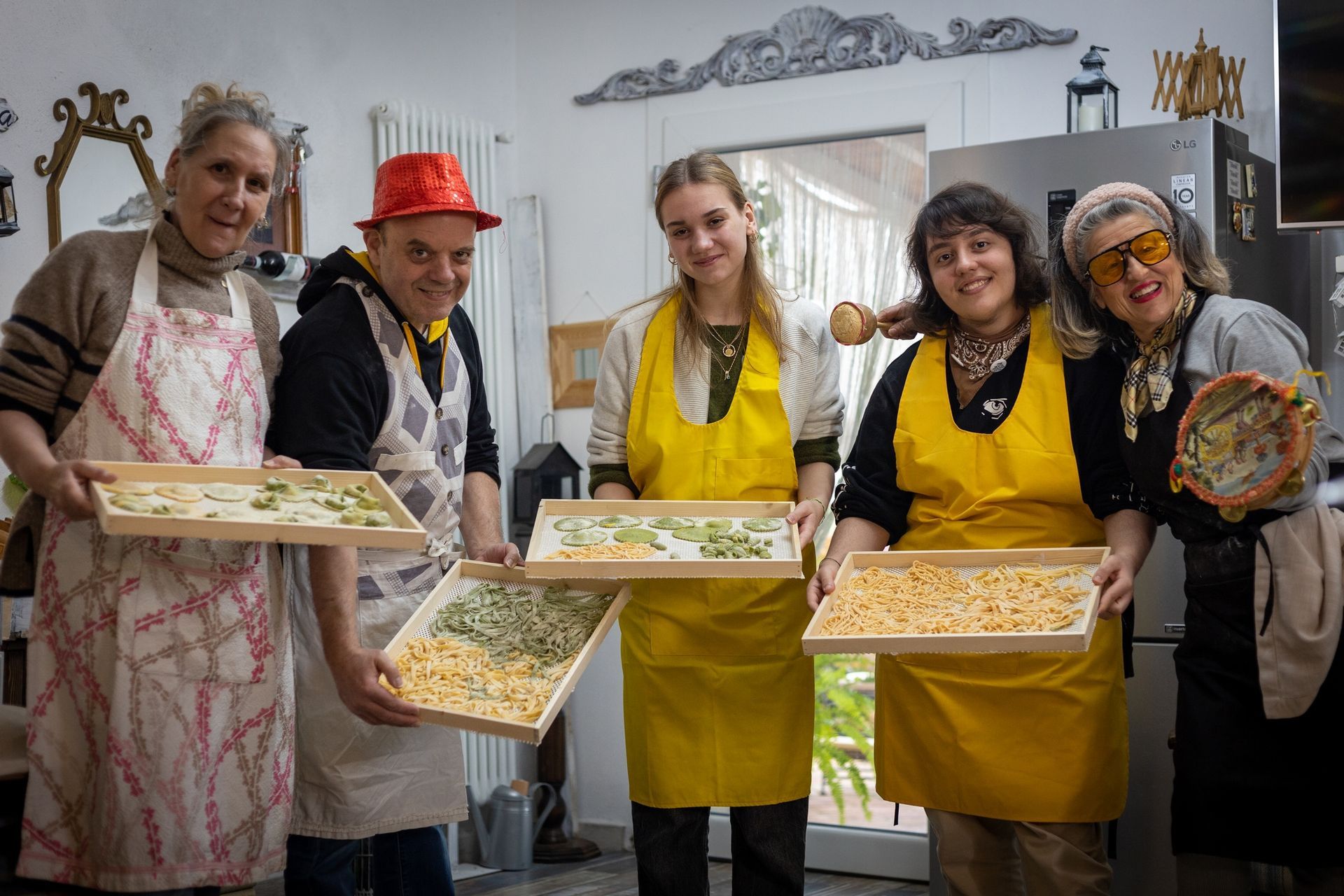
Most Italian cooking classes don't take place in professional kitchens. They happen in someone's house — a farmhouse in Tuscany, an apartment in Bologna, a fisherman's home in Ischia.
This is extraordinary. As a traveller, how often do you actually enter a stranger's home? Hotels and restaurants keep you at arm's length from real Italian life. A cooking class brings you inside it.
##
2. You slow down
Travel can be relentless. Museums, monuments, restaurants, transfers — always moving, always consuming. A cooking class forces you to stop.
You spend three, four, sometimes five hours in one place, focused on one thing. You chop slowly, knead carefully, taste repeatedly. By the end, you feel present in a way that's rare when travelling.
##
3. You have real conversations
Cooking side by side with someone creates a kind of intimacy that's hard to manufacture. With your hands occupied and your attention focused on the task, conversations happen naturally — about family, food, memory, tradition.
You'll learn more about Italy in one cooking class than in three days of museum visits. Not facts about history, but the lived texture of Italian life.
##
4. You understand the ingredients
Italian cooking is famously simple — a handful of ingredients, treated with respect. But simplicity requires understanding. Why San Marzano tomatoes and not others? Why this olive oil and not that one? Why does the pasta need to rest?
A local host answers these questions not with textbook explanations but with conviction, memory and sometimes a story about their grandmother. That's a completely different kind of knowledge.
##
5. You make something with your hands
There is something deeply satisfying about making food from scratch. In daily life, most of us have lost this connection — we buy pasta, we order pizza, we eat things made by machines.
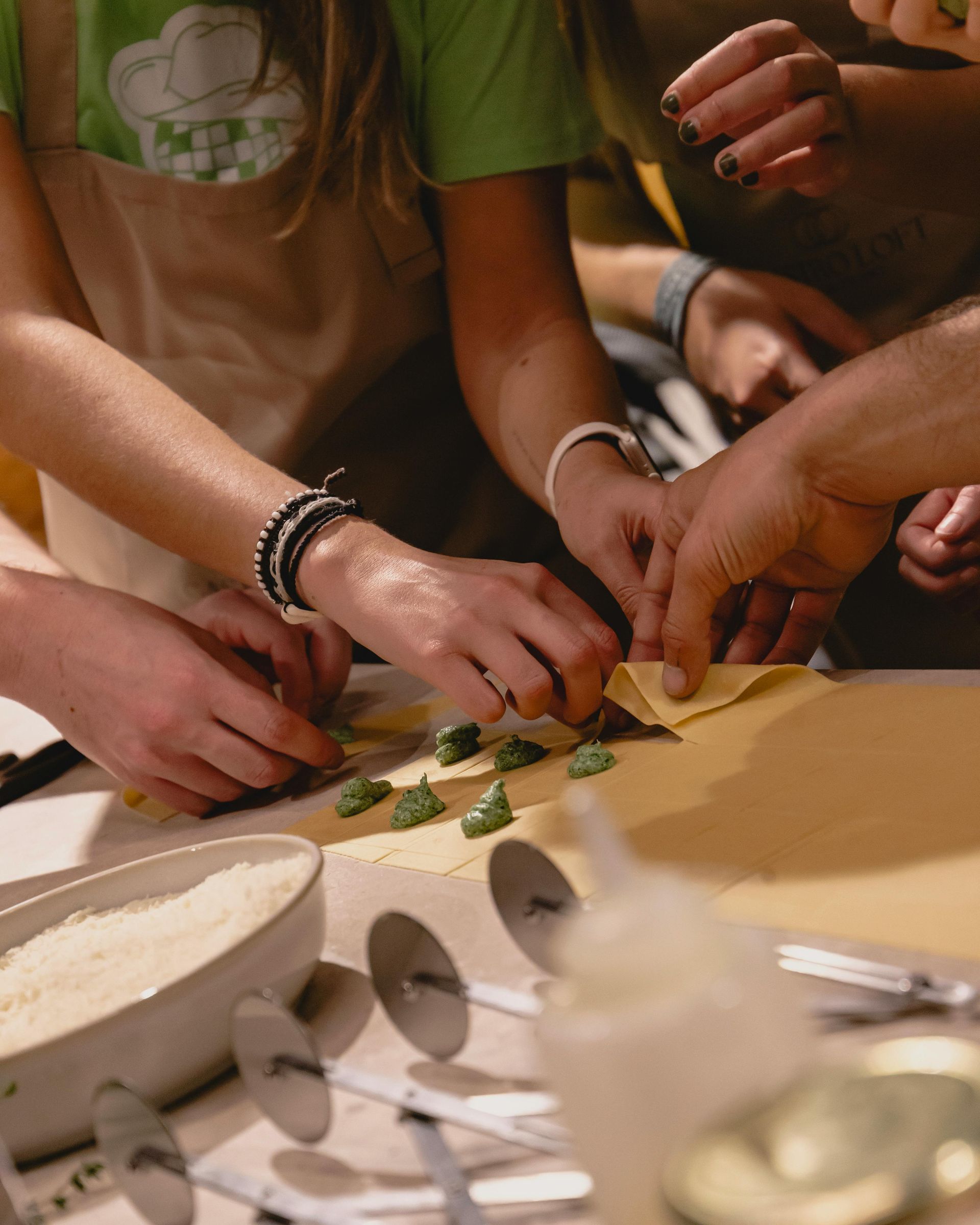
Rolling pasta dough with a wooden pin, stretching pizza by hand, shaping tortellini one by one — these are ancient gestures, repeated across centuries. Doing them yourself, even once, changes how you relate to food.
##
6. You eat the best meal of your trip
This is almost universally true. Every year, guests tell us that the meal they ate at the end of their cooking class was the best of their entire Italian trip.
It's not always because the food is technically superior. It's because you made it yourself, in someone's home, with fresh ingredients, surrounded by people you've just spent hours with. Context transforms flavour.
##
7. You connect with other guests
Most cooking classes bring together small groups of strangers — couples, solo travellers, friends, families from different countries. The shared activity creates instant common ground.
By the time you sit down to eat, you've already been through something together. Conversations flow easily. Friendships sometimes start. Travel can be lonely; cooking classes rarely are.
##
8. You take something home that lasts
A recipe written in a host's handwriting. A technique you didn't know before. The smell of a particular basil, or the texture of a properly rested pasta dough. These are things you carry with you.
Long after the photos fade and the hotel names are forgotten, you'll remember how to make a real Bolognese. And every time you make it, you'll be back in that kitchen in Italy.
##
9. You support local people directly
When you book a cooking class with a local host, your money goes directly to an Italian family — not to a corporation, not to a tour operator with offices in another country.
This matters. It supports the kind of authentic, small-scale tourism that keeps Italian culinary traditions alive and gives local people economic reasons to continue them.
##
10. You see Italy differently
After a cooking class in a Tuscan farmhouse, you can't drive past an olive grove without thinking about the oil. After a truffle hunt at dawn, the forests look different. After making pasta with a Bolognese sfoglina, every plate of tagliatelle tells a story.
A cooking class doesn't just teach you to cook Italian food. It teaches you to see Italy.
##
Ready to book your cooking class in Italy?
At Mama's Experiences, we organise cooking classes across Italy — from Rome to Bologna, from Tuscany to Ischia — with local hosts who are passionate about sharing their food and their culture.
Every experience is small, personal and completely authentic. You leave with recipes, memories and a much deeper understanding of the country you've visited.
👉
[Discover all cooking classes in Italy →]
---
Book your cooking class in Italy with Mama's Experiences and discover the country from the inside.